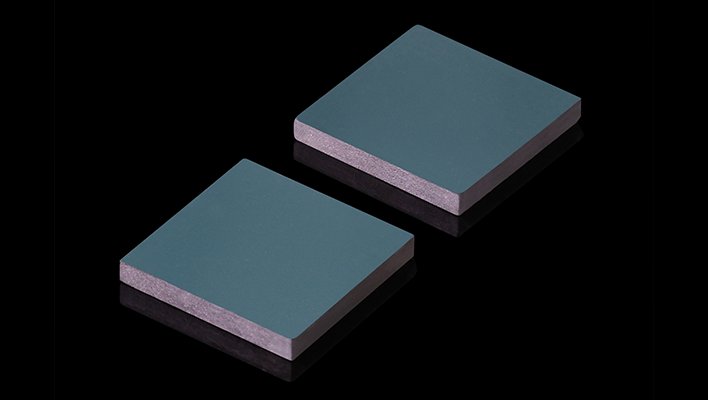
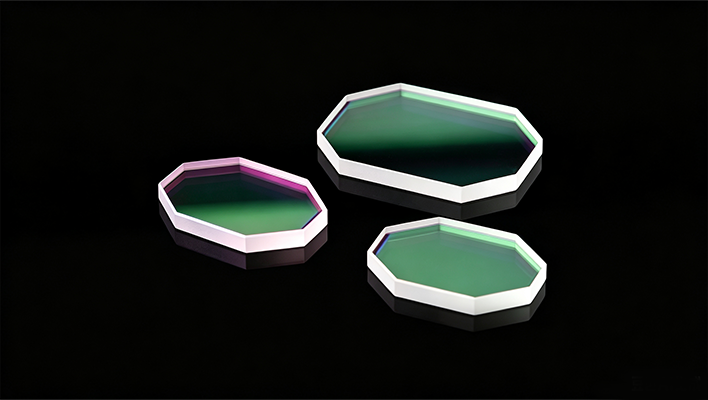
Quartz glass is a specialized industrial technical glass, entirely composed of a single component—silicon dioxide. With a series of excellent physical and chemical properties, it is hailed by materials science experts as the "king of glass." Today, quartz glass has become an important foundational material for national strategic emerging industries, serving widely in modern information industries, optics, photovoltaics, semiconductors, and playing a key role in defense and aerospace fields.
Pure quartz glass is composed only of silicon dioxide. In its molecular structure, the bonding presents a state of "short-range order, long-range disorder." Due to the very strong and stable bond energy, quartz glass exhibits:
High softening temperature
Excellent spectral transmission performance
Very low thermal expansion coefficient and conductivity
Exceptional chemical stability and radiation resistance
Longer service life under extreme conditions
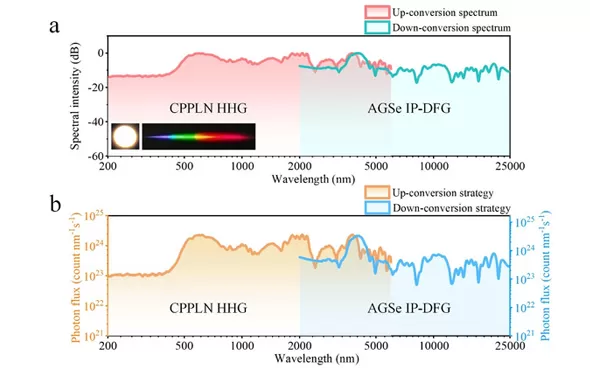
Compared to ordinary glass, high-purity quartz glass has outstanding transmittance over an extremely wide spectral range, covering wavelengths from far ultraviolet to far infrared, which is beyond the reach of conventional optical glass. Its excellent spectral transmittance and optical uniformity make it highly favored in the field of optical devices. Furthermore, with its superior radiation resistance, quartz glass is widely used as the window material for the "Shenzhou" series spacecraft and as protective shielding material for key components of the "Tiangong" space laboratory.
Optical fiber is a medium for transmitting optical signals, with data transmitted between both ends of the fiber. Optical fiber communication is widely used in the telecommunications industry, offering advantages such as strong anti-interference capability, high speed, and large transmission capacity, making it an important pillar of modern communication. The development of quartz optical fibers started early and has mature technology. With characteristics of high precision, high strength, high reliability, low energy consumption, and easy assembly, its importance in artificial satellites, deep space exploration, and inertial navigation systems has become increasingly prominent in recent years.
With the advancement of technology and industrial capabilities, quartz glass has gradually become integrated into daily life.
New Energy and Advanced Optics: In large laser systems, quartz glass is used in major domestic installations (such as the "Shenguang-III" main device) as key materials for end optical components like vacuum windows, lenses, protective plates, polarizers, continuous phase plates, and beam sampling gratings.
Micro-optics: Due to its excellent transmittance across continuous bands from ultraviolet to infrared, quartz glass is widely used in the micro-lens industry. Common products such as digital cameras, computer display devices, CCD camera lenses, and medical equipment rely on micro-lens arrays.
Mirrors are core components of space optical systems (such as space telescopes, detection satellites, meteorological satellites, reconnaissance satellites, etc.). As space imaging technology develops, the precision requirements for space optical systems continue to increase: the mirror surface must achieve high resolution and ensure defect-free imaging quality. Space is in a microgravity environment with extreme temperature differences, and launch missions have strict payload weight limitations. Therefore, large space optical systems need materials with characteristics such as low thermal deformation coefficient, high specific stiffness, and low surface roughness.
As a special optical material, quartz glass plays an irreplaceable role in aerospace, semiconductors, and precision instruments, with its performance directly determining the resolution, precision, stability, and reliability of related high-end equipment. However, although quartz glass inherently has excellent radiation resistance, prolonged exposure to the high-energy charged particle environment in space may still lead to gradual degradation of its optical and physical properties, affecting the lifespan of devices. Therefore, in-depth research on the impact mechanism of the space ionizing radiation environment on quartz glass materials remains an important and necessary frontier direction.
In conclusion, with its advantages of durability in extreme environments and excellent optical performance, quartz glass truly deserves the title of "king of glass." From supporting global communication networks through optical fibers to serving as key materials like telescope mirror blanks in the strong radiation environment of deep space, quartz glass remains an indispensable foundational pillar in modern photonics and aerospace engineering.
Q1: What is the main difference between fused quartz and fused silica?
Both have the same chemical composition of silicon dioxide, but the difference lies in the source of raw materials: fused quartz is usually made by melting natural high-purity quartz crystals, which may retain trace mineral impurities; fused silica is synthesized from silicon-containing precursors, with higher purity, almost no metal impurities, and better ultraviolet transmittance.
Q2: Why is the thermal expansion coefficient of quartz glass extremely low?
The tetrahedral network bonding inside quartz glass is very strong and stable, and is highly cross-linked in a rigid three-dimensional amorphous structure. This stable structure makes it difficult for atoms to undergo significant displacement when heated, allowing it to withstand severe thermal shocks (such as putting a red-hot quartz tube directly into cold water) without easily cracking.
Q3: What causes quartz glass to degrade or darken under long-term space radiation?
Long-term exposure to high-energy charged particles and ionizing radiation in space can cause some stable bonds to break or distort, forming local atomic defects in the glass network, known as "color centers." Color centers can absorb light at specific wavelengths, causing the spectral transmittance to gradually decrease, and the material appears to darken gradually.
Q4: Why can't ordinary optical crown glass be used for space telescope mirrors?
Ordinary optical glass has a higher thermal expansion coefficient and lower thermal conductivity. When a satellite switches between the high temperatures of direct sunlight and the low temperatures of entering Earth's shadow, ordinary glass can undergo structural deformation due to thermal expansion and contraction; this slight warping can destroy the precise curvature and focal plane accuracy required for high-resolution space imaging.
Q5: Is quartz glass easy to process into custom optical shapes?
Quartz glass has good hot and cold processing properties and can be ground, polished, cut, and welded using specialized glass lathes and diamond tools. Its stable structure also makes it easy to design lightweight components for weight-sensitive aerospace payloads, such as processing into complex closed honeycomb structures without significantly reducing rigidity.
For more in-depth technical understanding of the material properties, manufacturing specifications, and optical parameters of special glass, you can refer to the Optical Engineering resources in the SPIE Digital Library.