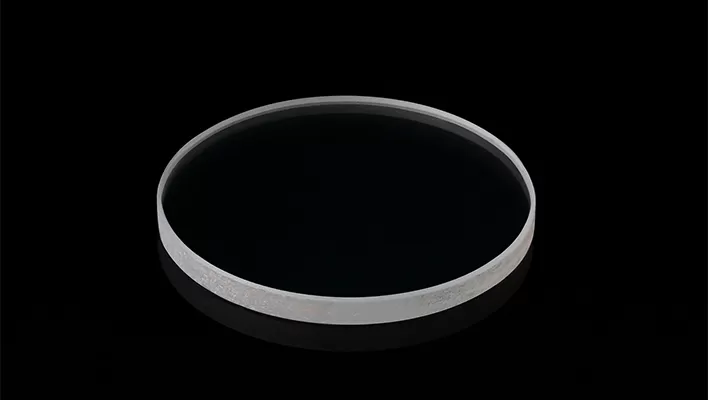
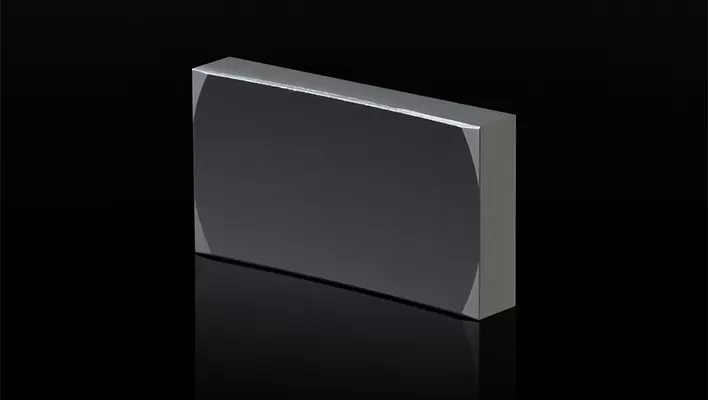
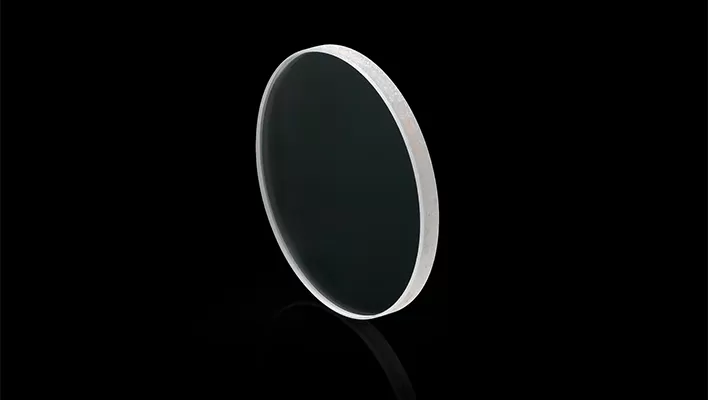
As the name suggests, aspheric lenses have a surface curvature that differs from the regular spherical curvature of traditional lenses. In the traditional pursuit of "thinner lenses," simply changing the surface curvature of spherical lenses often inevitably increases aberrations and distortions, leading to significant visual issues, including image blurring, field distortion, and a narrowed peripheral vision.
Modern aspheric designs can correct these imaging distortions, improve peripheral distortion, while making lenses lighter, thinner, flatter, more aesthetically pleasing, and maintaining good impact resistance for safety in wear. Traditional spherical lenses inherently have a visual defect known as spherical aberration. The higher the positive or negative diopter, the more apparent the "prism effect" (where light bends towards the base of the prism, causing the image to shift towards the prism's apex). To address this issue, modern lens design introduced "aspheric" geometry: the surface of aspheric lenses no longer maintains a single, constant curvature. This structure allows the lens to become significantly thinner and minimizes peripheral aberrations, thereby enhancing wearing comfort and aesthetic appeal.
Although modern spherical lenses also often adopt a flatter, lower curvature shape for aesthetics, they often have larger aberrations, and wearers with high diopters will still noticeably experience edge distortion. Aspheric technology originated in the field of imaging equipment to reduce aberrations, improve image quality, and reduce equipment weight; today, most high-end camera lenses on the market contain aspheric lens elements. After introducing aspheric technology into the field of optometry, manufacturers have not only significantly reduced peripheral image distortion but also achieved lighter, thinner, and more naturally visual eyewear lenses.
When using traditional spherical lenses, viewing objects through the periphery of the lens often causes distortion, thereby limiting the effective field of view for the wearer. Aspheric design minimizes peripheral aberrations, significantly expanding the clear visual area. Meanwhile, since aspheric lenses have a flatter base curve and use less material, the lenses are lighter, and the facial appearance after wearing them is more natural and aesthetically pleasing. Aspheric lenses can also reduce the magnification or reduction effect on the eyes, making them particularly recommended for people with higher refractive errors.
Due to their structurally optimized surface curvature, compared to spherical lenses, aspheric lenses have three main advantages:
Higher clarity: When paired with high-quality multi-layer coatings, they can further optimize optical performance, providing a sharper and more comfortable visual experience.
Less fatigue: The lenses are lighter, significantly reducing wearing pressure, making glasses experience closer to "burden-free."
More natural vision: Aspheric geometry can maximally reduce geometric distortion, making imaging more realistic and natural.
Measure and compare changes in vertex power between the center and periphery of the lens:
Spherical Lenses:
For negative lenses (myopia lenses), the center vertex power is less than the peripheral power;
For positive lenses (hyperopia lenses), the center power is less than or close to the peripheral power.
Aspheric Lenses:
Regardless of positive or negative lenses, moving from the center to the edge, the spherical power continuously decreases; simultaneously, as you get closer to the edge, the cylindrical (astigmatism) power gradually increases.
A lens clock measures surface curvature:
Spherical Lenses: Curvature readings are consistent across all areas of the lens surface.
Aspheric Lenses: Curvature readings vary in different areas, making them relatively easy to identify through differences in dial readings.
Under the same lens material and refractive index, compare spherical and aspheric lenses:
Appearance Comparison: Aspheric lenses appear flatter, thinner, and visually more realistic, comfortable, and natural.
Reflection Observation: Look at the reflection of a straight fluorescent tube (or similar straight light source) on the lens. Reflections on spherical lenses usually remain relatively straight (unless the diopter is extremely high); aspheric lenses, due to the continuous change in curvature from the center to the edge, will show noticeably curved or distorted reflections.
In conclusion, transitioning from traditional spherical structures to aspheric lens structures is a significant advancement in the field of optometry in terms of comfort and clarity. Aspheric lenses, with their flatter base curves and continuously changing surface geometry, can effectively eliminate peripheral distortion, reduce lens weight, and minimize the common "facial deformation" phenomenon seen with high-diopter lenses. By using tools such as lensmeters and spherometers, or employing simple reflection observation methods to verify lens characteristics, it can be ensured that glasses achieve their intended optical performance.
Q1: Why do eyes appear more natural through aspheric lenses?
Traditional high-diopter spherical lenses have steeper curvatures, which create a "magnified eye" effect for hyperopic wearers (commonly known as "goldfish eyes") and a "shrunken eye" effect for myopic wearers. Aspheric lenses have a flatter shape, significantly reducing these unwanted magnification/reduction distortions, making the eyes appear more natural to observers.
Q2: Is an adaptation period needed when switching from spherical to aspheric lenses?
Yes. A short adaptation period of a few days is normal. Since aspheric lenses significantly reduce peripheral distortion and expand and flatten the clear visual area, the eyes and brain need some time to adapt to the new visual experience.
Q3: Are aspheric designs suitable for all diopters?
Aspheric lenses are generally suitable for most people, but their advantages are more pronounced for those with high diopters (usually over +/-2.00D) or significant astigmatism, as these individuals are more affected by edge distortion and lens weight.
Q4: Why do diopter readings vary in different areas when detecting aspheric lenses?
Spherical lenses have a single uniform curvature; aspheric lenses gradually flatten from the optical center towards the edge. The changes in geometric structure cause variations in diopter readings in different areas to offset peripheral aberrations caused by oblique incidence.
Q5: Do aspheric lenses require more specialized care compared to ordinary lenses?
Cleaning methods are basically the same; however, because the aspheric surface is flatter, surface reflections may appear more easily. It is recommended to pair with high-quality anti-reflective coatings (AR) to enhance clarity and transmittance.
For further understanding of geometric optical structures and high-index lens optimization, you may refer to educational resources about eyeglass lenses on All About Vision, an optometry science website.